
Sustainability as a design choice
How sustainable is your business model… really?
It’s a question many organisations raise, but few feel confident answering. In our work at Optima Training, we see a familiar pattern: sustainability is frequently discussed in strategy documents, leadership conversations and annual reports but rarely embedded in the day‑to‑day decisions that shape how a business actually runs.
It’s rarely about bad intent. It’s the reality of modern organisational life: targets, delivery pressures, growth expectations, stakeholder demands, and operational constraints. With so much noise, sustainability can feel like something that sits “somewhere else”. Something to be dealt with tomorrow, once everything else is under control.
But if sustainability is always tomorrow’s problem, it never becomes today’s practice.
Looking at sustainability through a business model lens
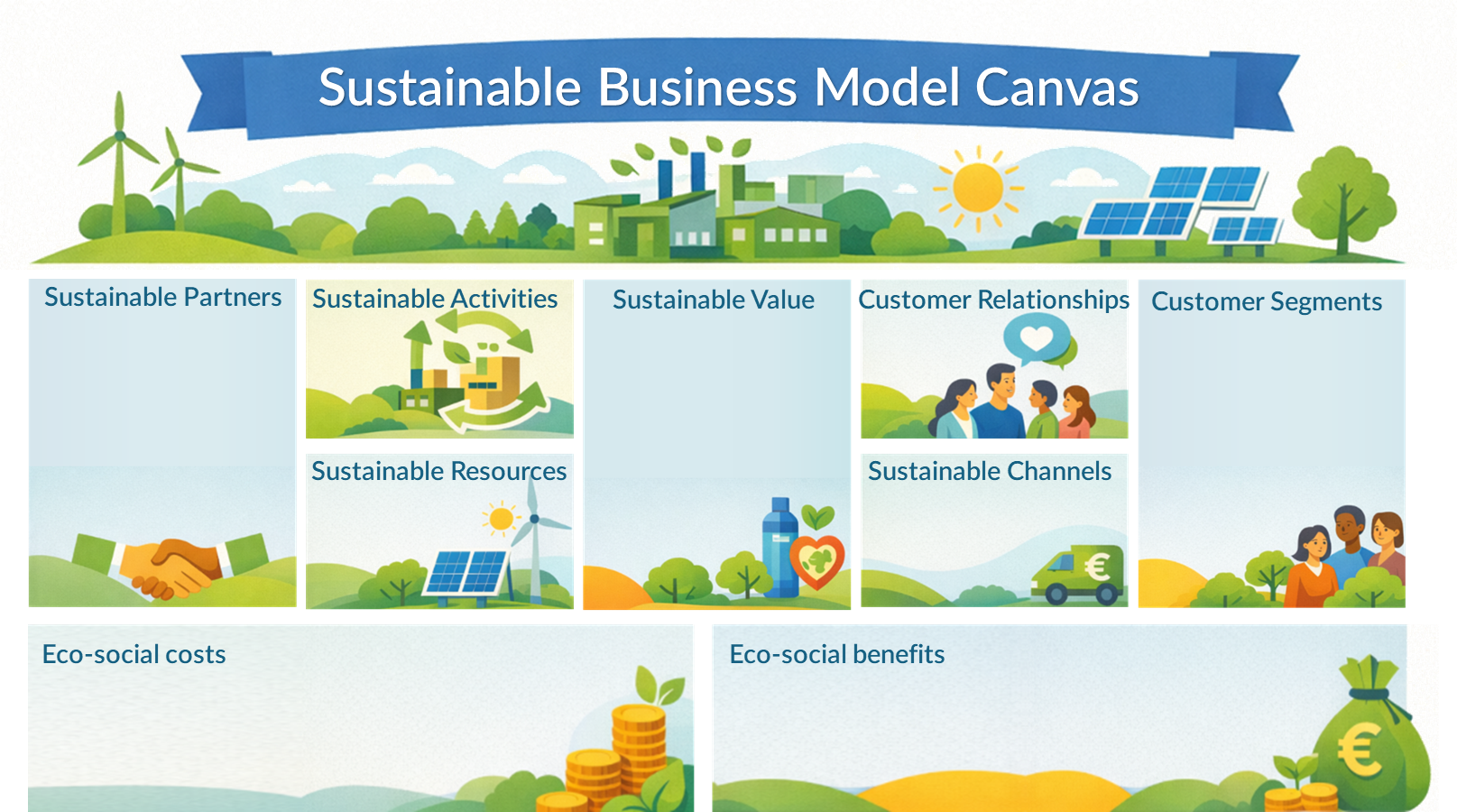
Recently, while preparing for a sustainability workshop, Mark explored how the Business Model Canvas can encourage a more grounded, practical conversation about sustainable design. Not “green” initiatives. Not slogans. But the real work: How does a business create value? And what is the impact of doing so?
To make the example concrete, he mapped the Canvas using the journey of Little Moons. Not just because he likes their mochi ice cream but because their story highlights something important about modern business models: sustainability isn’t an add-on. It’s a design choice.
What becomes clear, when you look closely, is how each component of the model shapes long-term resilience:
- Value Proposition – what value you offer and for whom
- Operations – how the product is made and delivered
- Partners – who you rely on and how those relationships work
- Processes – the everyday decisions that either support or undermine sustainability goals
When the pieces pull in different directions, sustainability becomes a burden. When they’re aligned, sustainability becomes part of how the business succeeds.
What we learnt from the Little Moons example
As we explored their journey, the insight was simple but powerful: Sustainability isn’t a standalone project. It’s baked into the design of the system – or it isn’t.
This is the shift many organisations struggle with. They talk about sustainability as a priority but treat it as a programme. A workstream. A responsibility that belongs to one team (or person) rather than the whole organisation.
And yet, those businesses that make progress are the ones that weave sustainability into their everyday operations; the trade-offs, routines, partnerships and behaviours that define how work gets done.
A thank you to Little Moons
A big thank you to the team at Little Moons for granting permission to use their logo in the video example. It’s greatly appreciated.
Watch the video
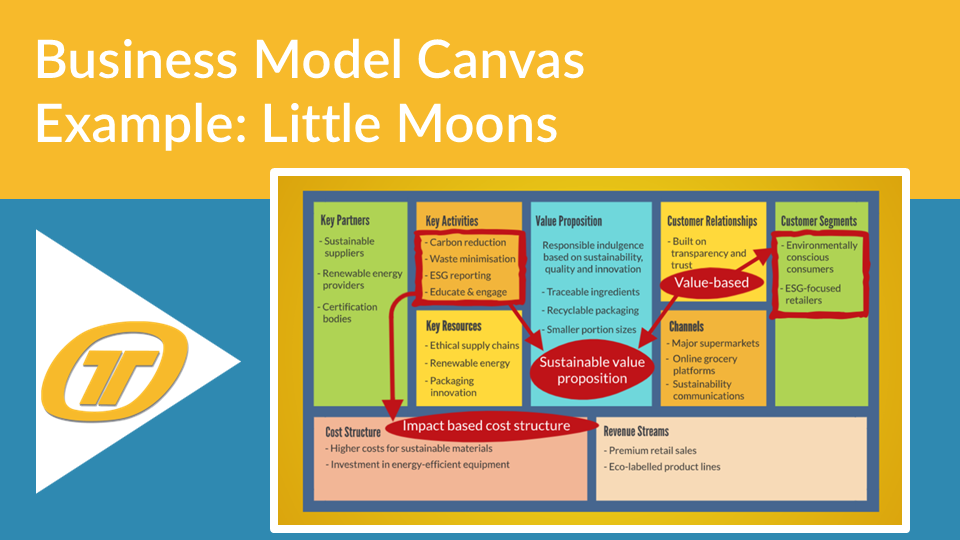
If you’d like to see how a sustainability lens changes the Business Model Canvas, and how these ideas can shape strategic conversations inside organisations, you can watch the full breakdown here: https://youtu.be/h4NbRd-e-IY
It’s designed to be practical, accessible and useful for leaders, teams and anyone wanting to make sustainability part of their real work, not just their stated ambitions.
(For clarity: the video is an independent educational case study and is not affiliated with or endorsed by Little Moons.)
Where organisations struggle most
Based on our workshop experiences, the challenges tend to fall into a few predictable areas:
- Clarity. What does “sustainable” mean for this business?
- Prioritisation. How do we make sustainability part of decision-making, not a competing priority?
- Alignment. Are operations, partners and processes actually set up to support the ambition?
- Behaviour. Do leaders role-model the everyday choices that reinforce sustainable thinking?
- Capability. Do people understand how to design sustainably?
These are not failures. They are signals – places where better conversations, clearer thinking and more integrated design can make a meaningful difference.
The question for leaders
The organisations that make progress are rarely the ones with the biggest budgets or boldest sustainability statements. They’re the ones willing to ask a different question:
“How do we design our business so that sustainability isn’t something we say – it’s something we do?”
That’s where the real work begins.